
History
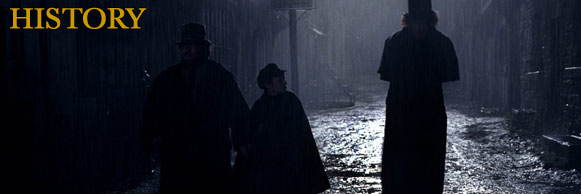
Novels, television programmes and feature films are often significant ways in which our students get ideas about the past.
As teachers of history, how do we react to this plethora of resources? How can we guide our students through the "fictionalised" history to historical resources? What sort of questions do we encourage our students to ask about the feature films, television documentaries, books and Internet resources that they can encounter and that we can bring into the classroom? How do we get them to interpret and evaluate these resources?
With the novels of Dickens we are faced with some interesting challenges. As an 'author of his time' he was dealing with issues which were based on key events of his time. In Oliver Twist he deals with issues arising from the Poor Law Amendment of 1834. So, in many ways, we could see this novel as a filtering of social and political issues of the day into a fictional format.
In the new film of Oliver Twist we are thus presented with Dickens story refiltered through the medium of a new feature film.
Our students can be pointed to primary and secondary sources from the Victorian period to examine the effect of the Poor Laws. So how can the film of Oliver Twist be used within the study of history?
The key questions on this source, or method of presentation are:
- How valid is a feature film of a novel in students' understanding of history?
- Does it further a student's understanding and interpretation of history or obscure it?
- Can we ask the same types of question about this variety of source?
- What student outcomes do we wish to encourage?
- Do we evaluate each type of source in a different way and how do we present these evaluations?
- How do we show that the events presented - film representation of history and a novel - could be interpreted or represented in different ways?
- What is the specificity of each medium of the sources and how should this affect the way in which we interpret them?
- How do we highlight the idea of history being presented in different ways at different moments in the past, present and future?
- Are primary sources more inherently valuable than secondary sources?